Symbology is the study of correspondences between the higher and lower realms, where every material object reflects an archetypal reality. As the Neoplatonists taught, the visible world is a symbol of the invisible, and true knowledge comes from deciphering these analogies. A symbol, therefore, is not arbitrary but participates in the reality it represents.
In the first article in this series on symbology, we looked at the seven levels at which a symbol is expressed forming a ladder between an actual physical thing and the idea in the mind of the Divine. Symbols speak in a language older than written words—a dialect of form, substance, and intention. To understand their grammar, we must recognise the twin foundations of all symbolic meaning: the natural and the artificial. These are not opposites but collaborators, weaving together nature’s gifts with human ingenuity.
The Natural: A Celestial Primordial Alphabet
Every symbol begins with the raw vocabulary of qualities, including:
- Substance (stone’s endurance, water’s fluidity)
- Colour (gold’s solar brilliance, green’s vivacity, crimson’s vital pulse)
- Shape (the circle’s eternity, the spiral’s ascent)
- Sound (thunder’s command, a stream’s whispered secret)
- Movement (the serpent’s sinuous movement, the leopard’s graceful speed)
These are the signatures of the divine in matter—what the Neoplatonists called the "vestiges of the Gods" in nature. A rose is never merely a flower; its thorns speak of guarded beauty, its fragrance of ephemeral grace.
The Artificial: Humanity’s Sacred Craft
When human hands shape these raw materials with specific intent, symbols gain new potency:
- The altar (hewn stone sanctified by prayer)
- The wedding ring (gold shaped into an eternal covenant)
- The loaf of bread (wheat winnowed, cracked, ground and baked into sustenance)
- The book (pulp and ink alchemised into knowledge)
Here, nature is not erased but augmented. The altar’s stone retains its primordial solidity, yet now bears the weight of the sacred. The ring’s gold still shines with solar glory, but its circle now connects hearts.
The Living Symbol: Where Nature and Artifice Unite
True symbology lives in this marriage. It combines natural qualities with conventional or traditional meanings. Consider:
- A key’s iron: (natural hardness) forged to allow entry into a lock (artificial mechanism guarding mystery)
- The beanstalk: in Jack and the Beanstalk: (organic growth) becoming a cosmic axis (human imagination perceiving the ladder to the metaphysical realm).
- A tower as in the tale of Rapunzel: with no door, its artificial or built structure needs Rapunzel’s natural golden hair to allow ascent to the upper chamber.
Fairy stories are rightly named ‘wonder tales’. They hide and yet reveal—to those who know where to look—deep mysteries. With the lens of natural and artificial symbology, we see how stories like Jack and the Beanstalk express this interplay:
- Natural: The bean (magical seed of potential), the clouds (realm beyond sight)
- Artificial: The stove where Jack hides, the golden harp (crafted instrument of harmony)
- Synthesis: The (natural) link between the above and below (the beanstalk) severed by Jack’s cleverness and axe (artificial) bringing down the giant ogre (natural energies misused).

Fig. 1 Fairytales
Fairy Tales and the Threefold Structure of Reality
Fairy tales and myths are not mere children’s stories; they are vessels of symbolic wisdom, carefully crafted to convey profound truths about the subtle nature of reality. Through their layered imagery, they provide a window into the realms of natural, human and divine mysteries.
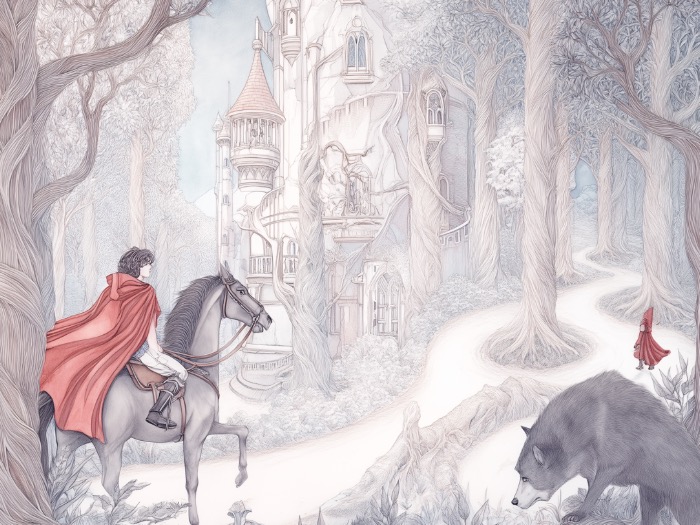
Some tales clearly present a threefold structure. In essence the structure is the Below, the Intermediate, and the Above—reflecting the soul’s journey through the natural, the metaphysical, and the divine. Three classic tales—Little Red Riding Hood, Jack and the Beanstalk, and Rapunzel—each illustrate this universal threefold sacred architecture in their own way, offering keys to understanding the spiritual path.
In Little Red Riding Hood, the young heroine moves between three distinct realms: her home with her mother (the familiar world), the winding path through the woods (the liminal space of trial and transformation), and finally, the cottage of her grandmother (an impoverished place of old wisdom, yet also potential deception). The wolf, a figure of both predation and cunning, embodies the dangers that lurk in the intermediate realm—the illusions and trials that test the seeker before they may reach true understanding.
Jack and the Beanstalk presents an even clearer image of ascent. Jack begins in the humble cottage with his mother (the earthly plane), climbs the towering beanstalk (the axis connecting worlds), and arrives at the giant’s castle in the clouds (the supra-physical realm of spiritual potential). The treasures he retrieves—gold coins, a golden-egg-laying goose, and a living vocal harp—are not merely material riches but symbols of spiritual attainment. Yet, these gifts cannot be fully integrated until the connection to the giant’s domain is severed, and his bulk crashes to earth (where it belongs), suggesting that spiritual gains must be grounded in wisdom, lest they remain vulnerable to the forces of greed and pride.

Fig 2 Rapunzel
Similarly, Rapunzel unfolds along this vertical axis. The prince begins in the forest (the lower world), climbs Rapunzel’s golden hair (the luminous bridge between realms), and reaches her chamber at the tower’s summit (the hidden sanctuary of the soul). The tower, with no door or stairs, may, like many fairytale symbols, represent various things: the body is one; the psyche, represented by the tower in the forest, would provide a different perspective.
These tales are not mere repetitions of the same story but distinct expressions of a universal truth: that the soul’s journey is one of ascent, trial, and integration. The folkloric tradition, as preserved by collectors like the Brothers Grimm, is not merely entertaining but instructive, encoding insights into the challenges and revelations awaiting the soul as it navigates the forest of time and space. Let’s consider one of these tales in more detail.

Fig 3. Jack and the Beanstalk.
The Spiritual Alchemy of Jack’s Journey
Jack’s tale is particularly rich in symbolic instruction. His mother’s cow stops giving milk (implying a drying up of inspiration). Instead of selling the cow, as instructed, Jack disobeys and follows his own inner guidance, to swap it for “magic beans” from a funny looking old man. This wayward act, not understood by his angry mother, leads to a connection being made between the realms of normal life (earth) and the cloudy realms above.
His ascent to the giant’s castle via the huge beanstalk, is not a straightforward victory but a series of initiatory tests. The ogre’s wife, who feeds him, represents a paradoxical figure—both nurturer and accomplice to the giant, much like the illusions of the world that sustain even as they ensnare. The treasures he claims—first the gold coins (providing material stability), then the goose that lays golden eggs (sustained connection with spiritual abundance), and finally the singing harp (the voice of divine harmony)—mark stages of spiritual attainment. Yet, the harp nearly betrays him, reminding us that higher gifts demand discernment; they cannot be wielded carelessly.
In each stage of his time in the cloud castle, he hides in a stove or cooking pot, a fitting symbol of alchemy and change, allowing Jack access to spiritual rewards. The destruction of the giant—the severing of the beanstalk—signifies the necessity of detachment. True possession of spiritual treasures requires that the soul no longer be bound by the titanic forces of untamed nature (the ogre) or the deceptive comforts of the intermediate world (the ogre’s wife). Only when the connection is dissolved can Jack and his mother live in peace, suggesting that spiritual riches must be fully integrated into earthly life to bear their true fruit.
See how symbols are used in myths, in our introductory course about Theseus and the Minotaur.
AI assisted artwork.